Written by

Allan Novais
Section
The Facility Problem
At some point, every serious Bitcoin mining investor faces the same decision: if you want to scale, you need more power, more space, and more infrastructure. Building your own facility feels like the logical next step. It gives you control, and it removes the middleman.
But the reality of building and operating a mining facility is far more complex — and far more capital-intensive — than most investors anticipate. Construction timelines, electrical buildouts, cooling systems, security infrastructure, regulatory permits, and staffing a technical team all stand between you and a powered-on miner.
For most operators, there is a better path.
What Hosted Mining Actually Means
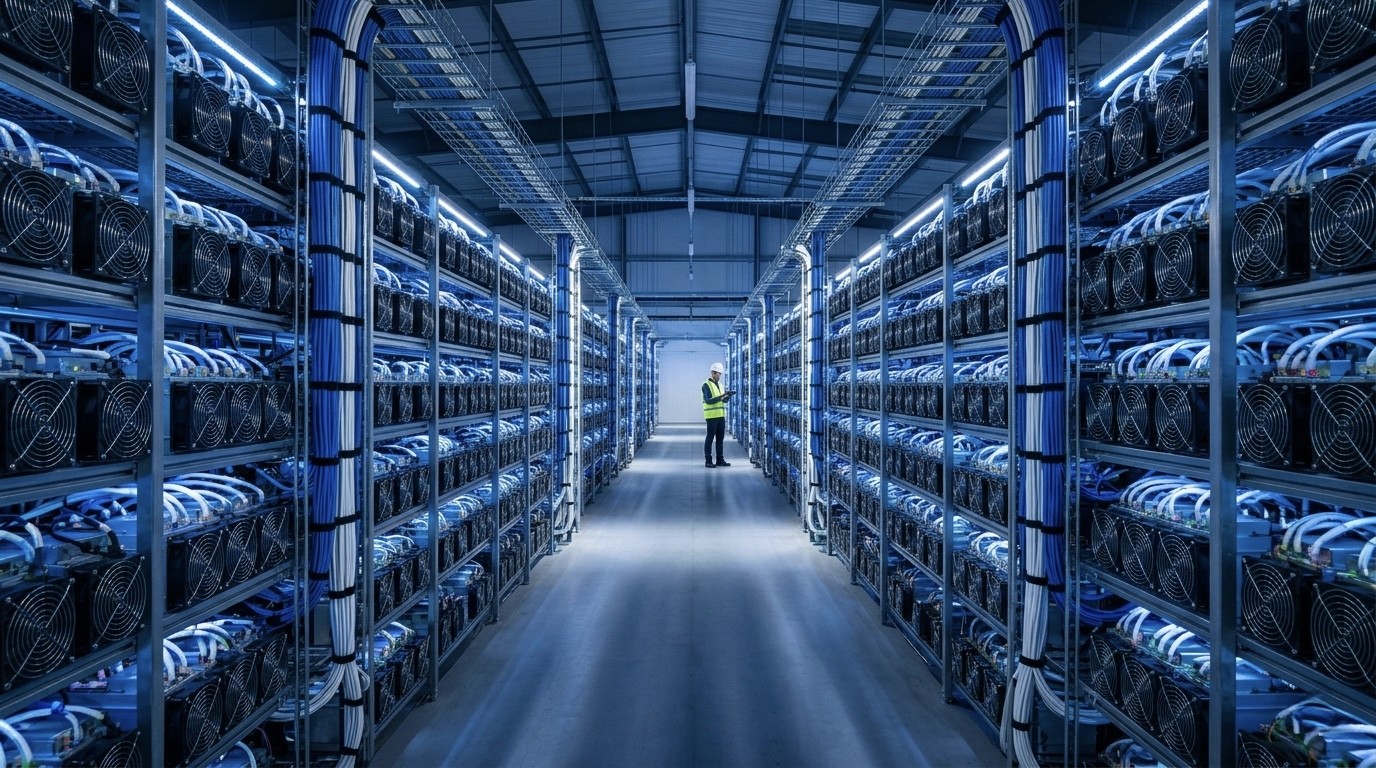
Hosted mining — also called colocation or managed hosting — means deploying your mining hardware into an existing, professionally operated facility. You own the machines. The hosting provider owns and operates the infrastructure.
In a well-structured hosting arrangement, the provider handles:
Power and electrical infrastructure
Physical security and access control
Installation and hardware configuration
24/7 monitoring and technical support
Cooling and environmental management
Regular operational reporting
What you get is the economics of owning mining hardware — the hashrate, the Bitcoin rewards — without the operational burden of running a facility.
The Capital Efficiency Argument
Building a mining facility from scratch requires substantial upfront capital that has nothing to do with mining hardware. Electrical infrastructure alone — transformers, switchgear, PDUs, cabling — can cost hundreds of thousands of dollars before a single miner is turned on. Add construction or lease costs, cooling systems, security, and staffing, and you are looking at a significant capital commitment that takes years to amortize.
Hosted mining converts that capital expenditure into an operational expense. Instead of tying up capital in infrastructure, you deploy it into hardware — the asset that actually generates hashrate and earns Bitcoin. The facility cost becomes a predictable monthly line item rather than a multi-year capital project.
Speed to Deployment
Time is money in Bitcoin mining. Every day your hardware is not running is revenue you are not generating. Building a facility takes months — sometimes over a year when you factor in permitting, construction, and electrical buildout.
Deploying into an existing hosted facility compresses that timeline dramatically. In many cases, hardware can be installed and online within days of arriving at the facility. For operators who want to move quickly — particularly during favorable market conditions — that speed advantage is significant.
Access to Better Energy
One of the most powerful benefits of hosted mining is access to energy rates that individual operators could never negotiate on their own. Large-scale facilities have the purchasing power to secure competitive electricity contracts — often well below what a small or mid-size operator could access independently.
In regions like Paraguay, where hydroelectric energy is abundant and competitively priced, a professional hosting operator has already done the work of establishing the energy infrastructure and negotiating the rates. Deploying into that facility means your hardware immediately benefits from that energy advantage.
Operational Expertise Without the Overhead
Running a mining facility at scale requires specialized expertise — electrical engineers, firmware technicians, network administrators, and operations managers. Building that team takes time and money, and retaining experienced technical staff is an ongoing challenge.
Hosted facilities have already built those teams. When you deploy into a professional operation, you are not just renting rack space — you are accessing an entire operational infrastructure that would take years and significant investment to replicate independently.
Transparency and Reporting
A legitimate hosting provider gives you full visibility into your operation. That means real-time monitoring dashboards, regular reports on hashrate, uptime, energy consumption, and hardware status. You should always know exactly how your machines are performing and what you are paying for.
When evaluating a hosting partner, transparency is one of the most important signals of operational quality. Providers who can't or won't show you detailed performance data are a red flag.
When Building Your Own Facility Makes Sense
Hosted mining is not the right answer for every operator. At very large scale — tens of megawatts and above — the economics of owning your own infrastructure can make sense, particularly if you have the capital, the expertise, and a long enough time horizon to amortize the buildout costs.
But for the vast majority of serious mining investors — from individuals deploying dozens of machines to funds deploying hundreds — hosted infrastructure offers a faster, more capital-efficient, and more operationally sound path to scale.
Conclusion
Scaling a Bitcoin mining operation does not require building a facility. It requires finding the right facility — one with competitive energy, proven infrastructure, experienced operators, and full transparency into your hardware's performance.
The operators who scale fastest in 2026 are the ones who focus their capital on hashrate and let professional hosting providers handle everything else. That is the model NeuraHash was built around — and it is why our clients can scale without the overhead.